
A Year Into iPhone Call Screening: What Businesses Are Actually Seeing
Last fall, we wrote about what iOS 26 Call Screening could mean for businesses that call customers and patients. A year later, the feature has moved from new to normal, and it’s worth checking in on what’s changed and what hasn’t.
Here’s where things stand.
A quick refresher
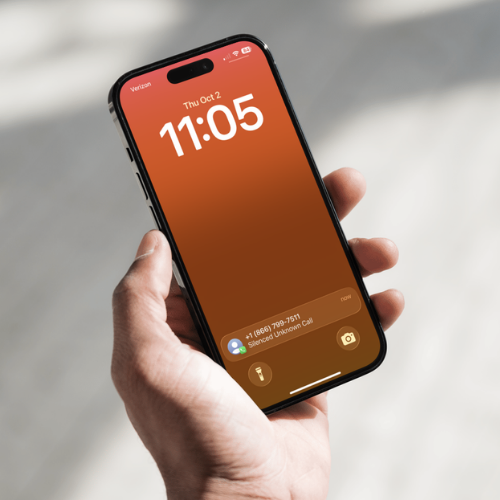
Call Screening applies to calls from numbers that aren’t saved in a user’s contacts. Before the phone rings, the iPhone answers the call and asks the caller to state their name and reason for calling. The recipient then sees a transcript and decides whether to pick up. Users can also send unknown calls straight to voicemail.
Call Screening isn’t on by default. iPhone users have to turn it on themselves under Settings > Apps > Phone > Screen Unknown Callers. That means not every iPhone user has it enabled. But the people who turn it on are likely the ones who already screen heavily: people who are tired of spam and skeptical of numbers they don’t recognize.
What’s changed, and what hasn’t
Since launch, Apple has expanded Call Screening to more languages and regions rather than changing how it works. An upcoming iOS 27 update brings it to Italian-speaking users, for example.
In other words, Call Screening isn’t experimental anymore. It’s a standard part of the iPhone, and it will only reach more people from here.
What the data shows
Screening didn’t create the answer-rate problem. Consumers were letting unknown calls go to voicemail long before screening existed, and screening is the latest step in a long shift.
The consumer research makes that clear. TNS/Kantar found that 75–79% of consumers don’t answer calls from unknown numbers, depending on the industry. Hiya found that 92% of consumers believe unidentified calls are fraudulent.
Why caller identity matters more during screening
Screening changes when the answer decision happens. The recipient used to decide in a second or two from whatever appeared on the incoming call screen. Now they’re reading who’s calling and why, and then deciding.
A recognizable business name helps at that moment. A bare number is easy to ignore. A “Spam Likely” label usually ends the call before it starts.
Numbers that patients or customers have saved in their contacts skip screening entirely. That makes “save our number” a simple, worthwhile request to include in onboarding and appointment confirmations.
The double filter: spam flags and screening
Screening doesn’t happen in isolation. If carrier analytics have already flagged your number, the recipient sees that label first, and a clear screening response won’t undo it.
That’s why number health matters as much as ever. Flags can come back even after a number has been cleaned up, so monitoring needs to be ongoing rather than a one-time fix.
What’s working for outbound teams now
A few practices consistently make a difference:
- Brand and monitor your outbound numbers. A recognizable caller name and a clean number reputation are what the recipient sees at the moment they decide.
- Lead with who and why. Agents should state the organization’s name and the reason for the call in the first few seconds, because that’s what the screening transcript shows.
- Check your dialers. Some answering machine detection systems treat the screening prompt as voicemail and drop or misroute the call. It’s worth testing how your platform handles it.
- Ask people to save your number. Saved contacts skip screening entirely.
- Track your own numbers. Answer rates by number, by time of day, and by call type say more about your situation than industry forecasts do.
What this means for healthcare
Healthcare calls are especially exposed to screening. Appointment reminders, lab follow-ups, and care coordination calls usually come from numbers patients haven’t saved. Many patients don’t know which of a health system’s numbers will call them.
When VuePoint Diagnostics implemented BrandDelivery, the company saw a 33% increase in call answer rates.
The bottom line
Call screening isn’t going away, and it will keep expanding. The good news is that it rewards what legitimate callers should already be doing: identifying themselves clearly, keeping their numbers in good standing, and giving people a reason to pick up.
Related Posts

Digital Markets: An Increase in Sales and E-Commerce Security

Non-Profit Fundraising: Contact Management and a Maximized Budget
